
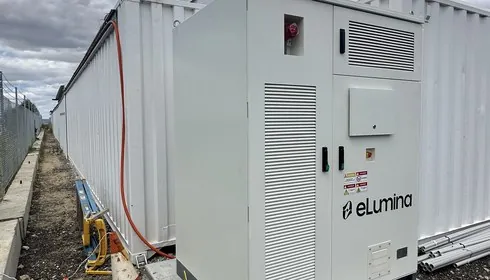
Off-Grid Power for RJV
A 233 kWh battery and 30.6 kW of solar, installed and commissioned by our electricians, power RJV’s four northern workshop domes, wash pad and fuel tank, off the grid.
Innovation
Remote camps run on diesel around the clock, in buildings that fight the heat. We’re building the alternative, and we’re proving it on our own sites first.
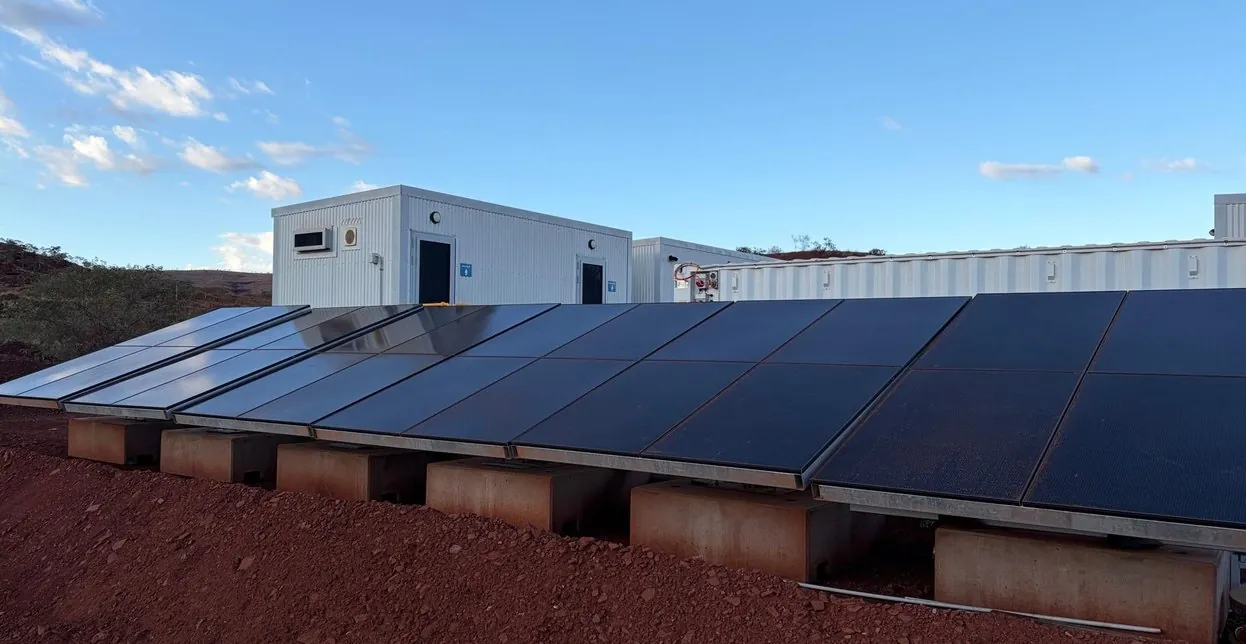
Delivered and Working Today
A 233 kWh battery and 30.6 kW of solar, installed and commissioned by our electricians, power RJV’s four northern workshop domes, wash pad and fuel tank, off the grid.
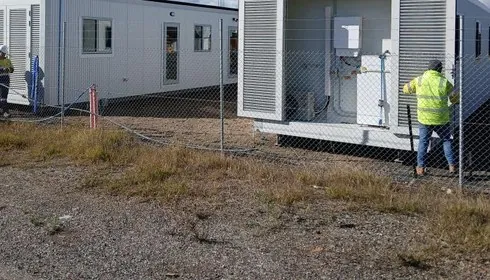
Two 12 × 3 m transportable offices we made, delivered and connected, running on 12.2 kW of rooftop solar and a 24 kWh battery.
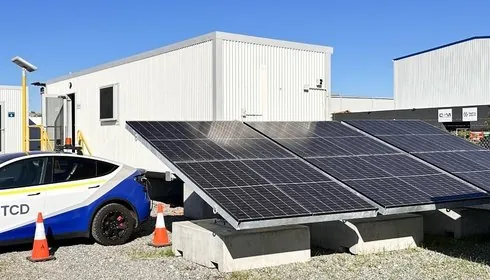
An office, crib room and ablutions we built and run on a Pilbara mine site, on our own solar, battery and EV charging.
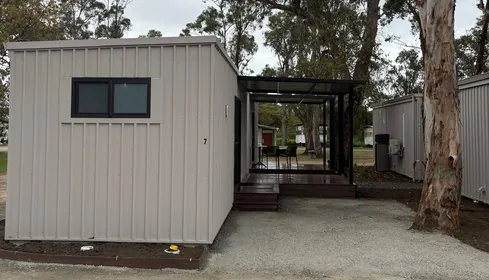
TCD buildings are working at Brockman 4, Brockman 2 and Esperance, and sixteen studios we made are in place at Harvey Caravan Park.
What We’ve Done So Far
8 dBA
quieter, measured at Holcim, Aug 2025
10 dB is heard as about half as loud, so 8 dB is roughly 40% quieter to the ear: a busy office versus a quiet library. Better sleep for crews.
Measured result
Where It Leads
Most camp energy studies fix the supply. We fix the demand and the supply, so the rooftops do the work and there is no solar farm to clear.
~2,700 kWh
camp demand a day
against 4,500 kWh for a standard build
Modelled for a 120-person Pilbara camp
~87%
of demand met from rooftops
against ~52% for a standard build
Modelled for a 120-person Pilbara camp
0 m²
of ground cleared for solar
rooftops instead of a 6,000 m² solar farm
Modelled for a 120-person Pilbara camp
3–5 h
generator a day, as early-morning backup
instead of running 24/7
Modelled for a 120-person Pilbara camp
85–100%
less diesel
against 55–85% for a supply-only retrofit
Modelled for a 120-person Pilbara camp
How Clients Get There
Cooler, quieter rooms that need less power from day one.
Battery cabinets fabricated in our workshop, with smart controls and a live dashboard.
Designed in-house and installed to Australian standards by our own licensed electricians, EC15850.
The Full Numbers
Our own camp power system scales from a single building to a full camp, on any mix of grid, generator, battery and solar. Start with better buildings on existing power, add batteries, then solar, without rework.
~22.5 kWh
per person a day
against 37.5 kWh today
Modelled for a 120-person Pilbara camp
30–50%
less cooling energy
from a better building envelope
Modelled for a 120-person Pilbara camp
~500 kW
rooftop solar across the camp
on ~2,500 m² of usable roof
Modelled for a 120-person Pilbara camp
~2,350 kWh
solar generated a day
at Pilbara irradiation
Modelled for a 120-person Pilbara camp
Start on your existing power, then add batteries and rooftop solar, without rework. See Building and Electrical.
Talk to Us About Your Camp